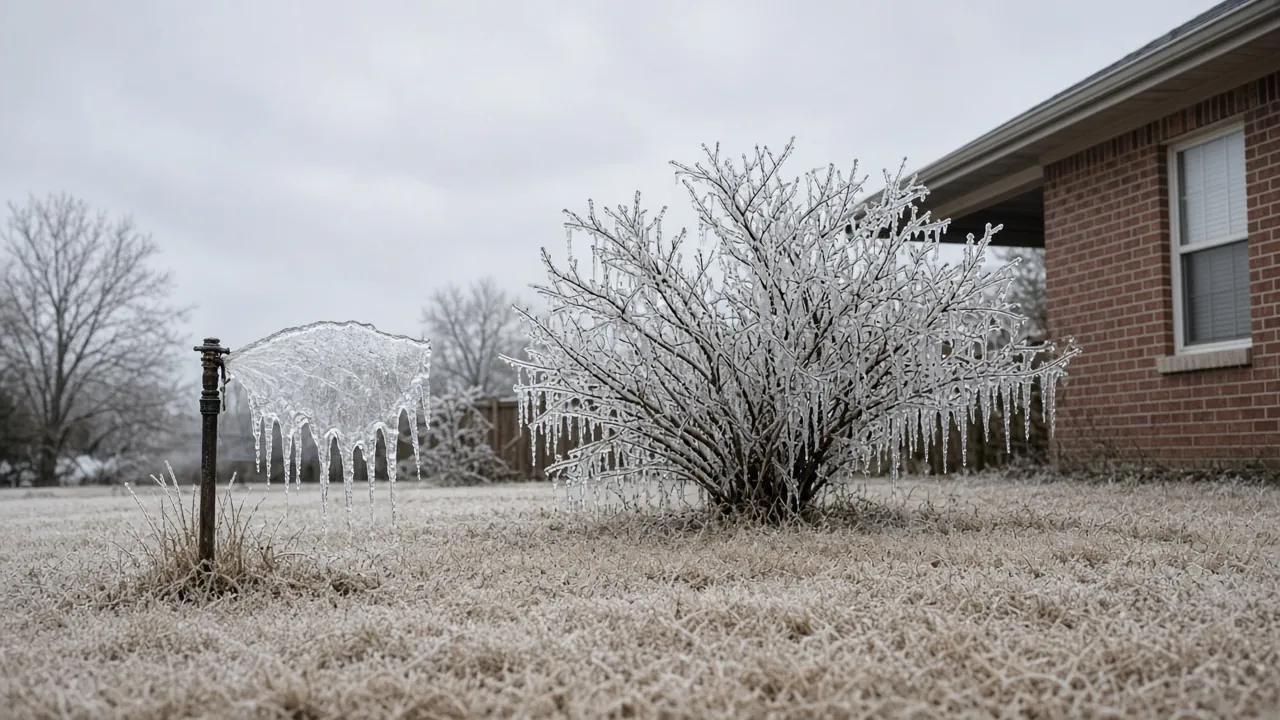
Dallas winters are mostly mild, which makes it easy to forget that a few nights each year can drop well below freezing. When they do, the part of a sprinkler system most likely to break is not the buried pipe. It is the backflow device sitting above ground near the house, full of water and exposed to the wind.
What is at risk
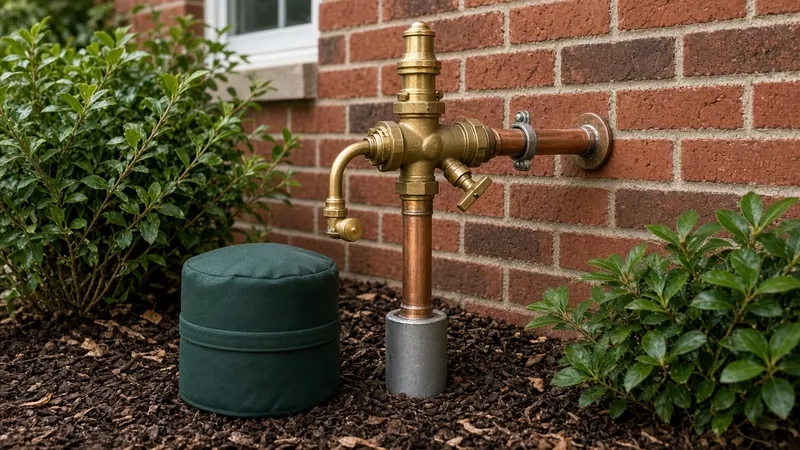
The backflow preventer. Most Dallas homes have a pressure vacuum breaker or a similar device above ground on the irrigation line. It is made of brass and holds water. When that water freezes, it expands and can crack the body or pop internal parts.
Exposed pipe. The short sections of pipe leading up to and away from the backflow device are also above ground.
Shallow lines and heads. Buried pipe is usually insulated enough by the soil for a short Dallas freeze. Very shallow lines and heads can be damaged in a prolonged hard freeze.
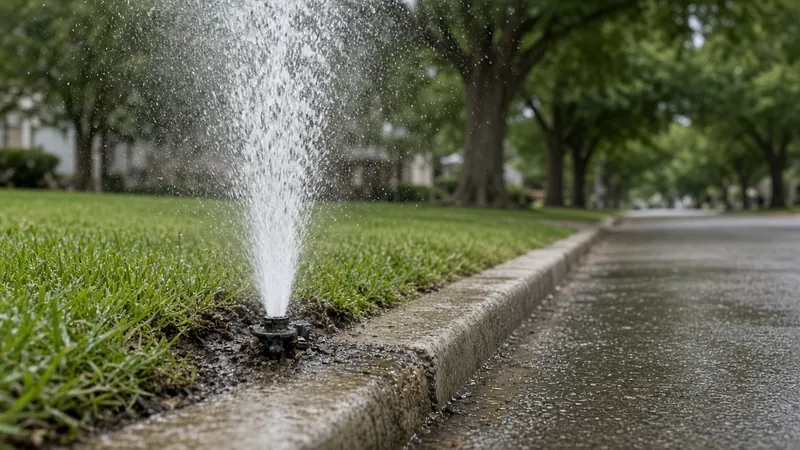
The controller. It runs on a schedule. If it waters during a freeze and the sensor does not stop it, it sprays water that turns into ice on walks and streets.
Before a hard freeze
When a forecast shows temperatures well below freezing, especially for more than a few hours:
- Turn the controller off, or put it in rain mode.
- Close the irrigation shut-off valve. It is usually on the pipe just before the backflow device, or in a box near the water meter.
- Drain the backflow device. Open the small test cocks on the device a quarter turn with a flat screwdriver to let water out. Many techs leave them partly open through the freeze. Some devices also have ball valves you can set halfway so water does not get trapped.
- Insulate it. Wrap the backflow device and the exposed pipe with an insulated cover, pipe insulation, or old towels covered with a plastic bag to keep them dry. Many hardware stores sell insulated backflow covers sized for common devices.
That is usually enough for a typical Dallas freeze.
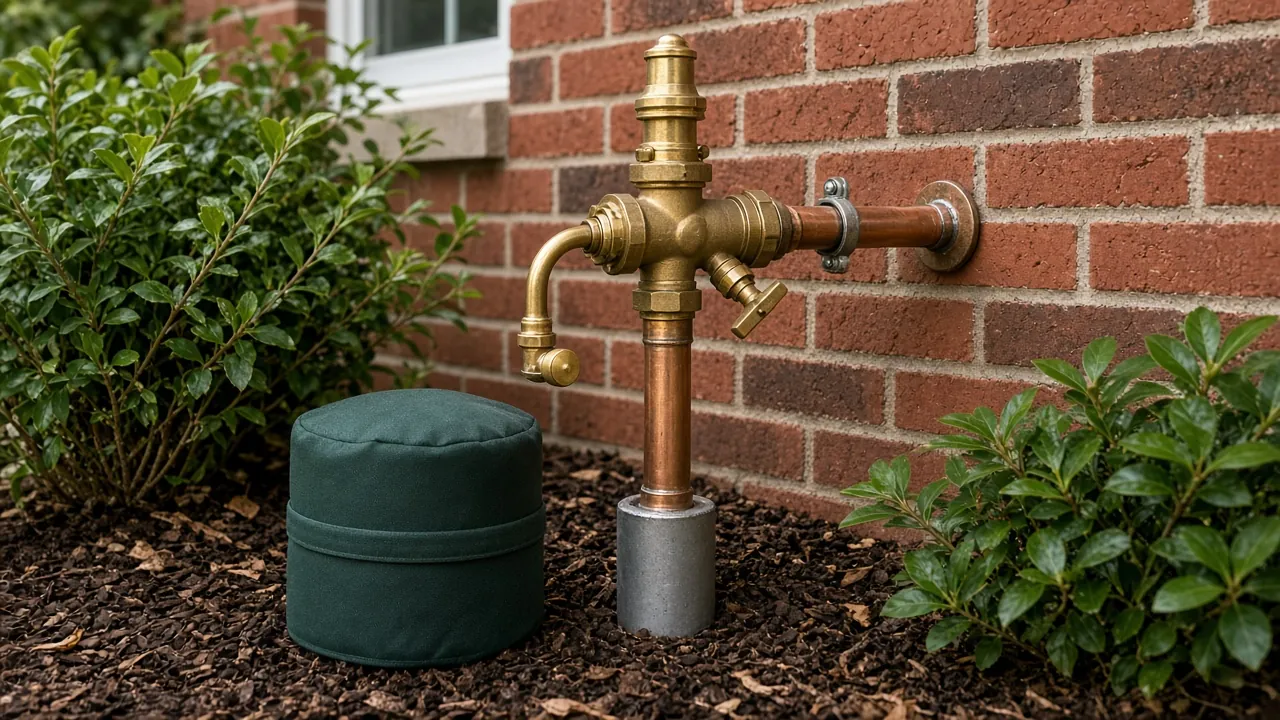
Do you need a blowout?
In colder climates, sprinkler systems are blown out with compressed air every fall. In Dallas that is usually not necessary because freezes are short and the ground rarely freezes deep. Blowing out a system with too much air pressure can also damage it. If you expect a long, severe freeze or you are leaving the house for weeks in winter, talk to us about whether draining the system makes sense.
Freeze sensors
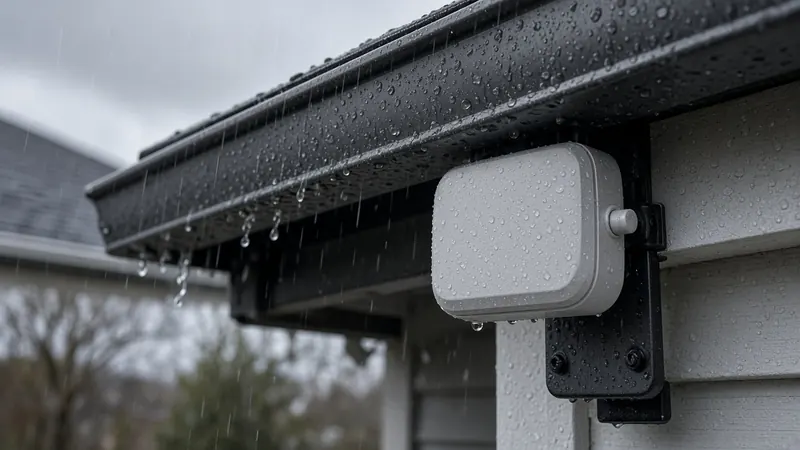
The City of Dallas ordinance requires automatic systems to have freeze sensors. If yours works, the system will not run when it is freezing. But a sensor does not protect the backflow device from bursting. Shutting off and draining is still the step that matters most. See rain and freeze sensors.
After the freeze
Wait until temperatures are comfortably above freezing, then:
- Check the backflow device. Look for cracks, bulges or pieces that look out of place.
- Close the test cocks you opened.
- Open the irrigation shut-off slowly. Watch and listen at the backflow device. If water sprays from the device, close the shut-off and call for repair.
- Watch the water meter. With the house off and the sprinkler valves closed, the leak indicator should not move. If it does, there may be damage on the mainline.
- Run each zone manually. Look for geysers, bubbling and weak heads.
- Turn the controller back on at a winter setting.
Winter watering
Warm-season lawns go dormant in winter and need very little water. Many weeks the system can be off entirely. During a long dry stretch, a light watering helps protect roots, especially before a hard freeze since moist soil holds heat better than dry soil. Keep it light and within your watering days.
If the backflow cracked
It happens. Sometimes a cracked bonnet or internal part can be replaced, and sometimes the whole device needs replacing. In either case, a backflow device must be the right type for the system and installed correctly. Leave the irrigation shut-off closed until it is fixed. The rest of the house still has water. See backflow preventer basics.
Call us
If you want help preparing for a freeze, or something sprayed when you turned the water back on, call 469-208-4222.
Have a question this did not answer? Call 469-208-4222 and ask. More articles on the blog.