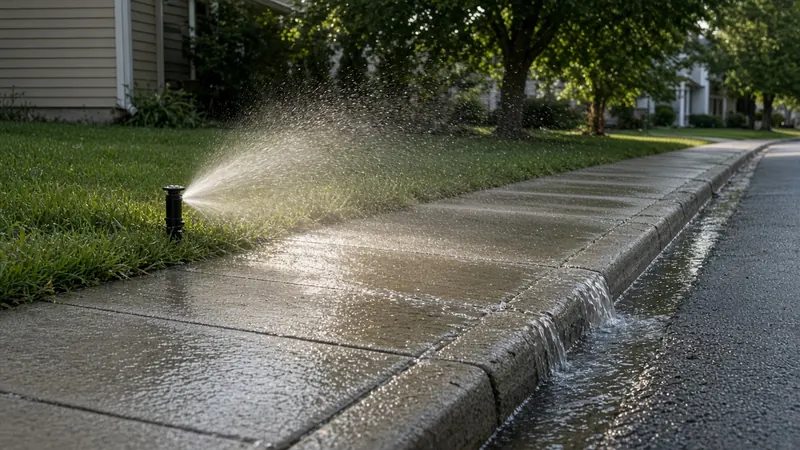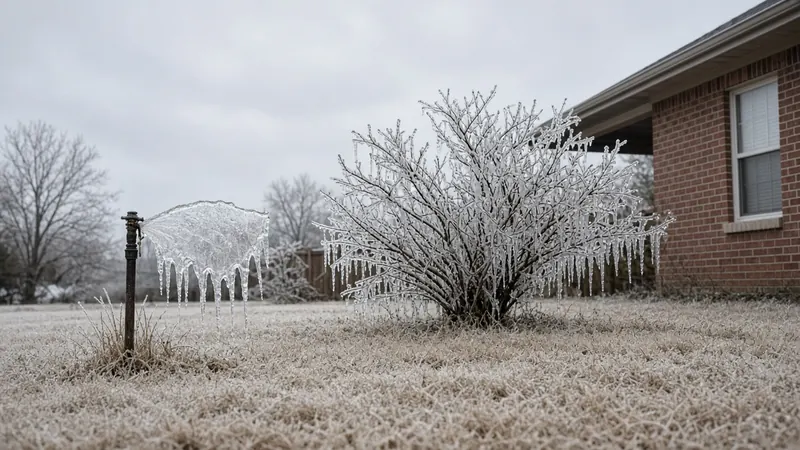
Few things make a sprinkler system look worse than running in the middle of a thunderstorm or spraying ice onto a sidewalk. The City of Dallas ordinance requires automatic sprinkler systems to have rain and freeze sensors for exactly that reason. Here is how they work and how to make sure yours does.
What a rain sensor does
Most traditional rain sensors use a stack of small discs that absorb water and swell. When enough rain has fallen, the swollen discs press a switch that interrupts the circuit between the controller and the valves. The system cannot run until the discs dry out. Most have an adjustable cap or ring to set how much rain it takes to trip the switch.
Some newer sensors are wireless and talk to a receiver at the controller. Many smart controllers skip the physical sensor and use local weather data instead. Whether a weather-based skip satisfies the ordinance is a question to check with the city. A physical sensor is the simplest way to be sure.
What a freeze sensor does
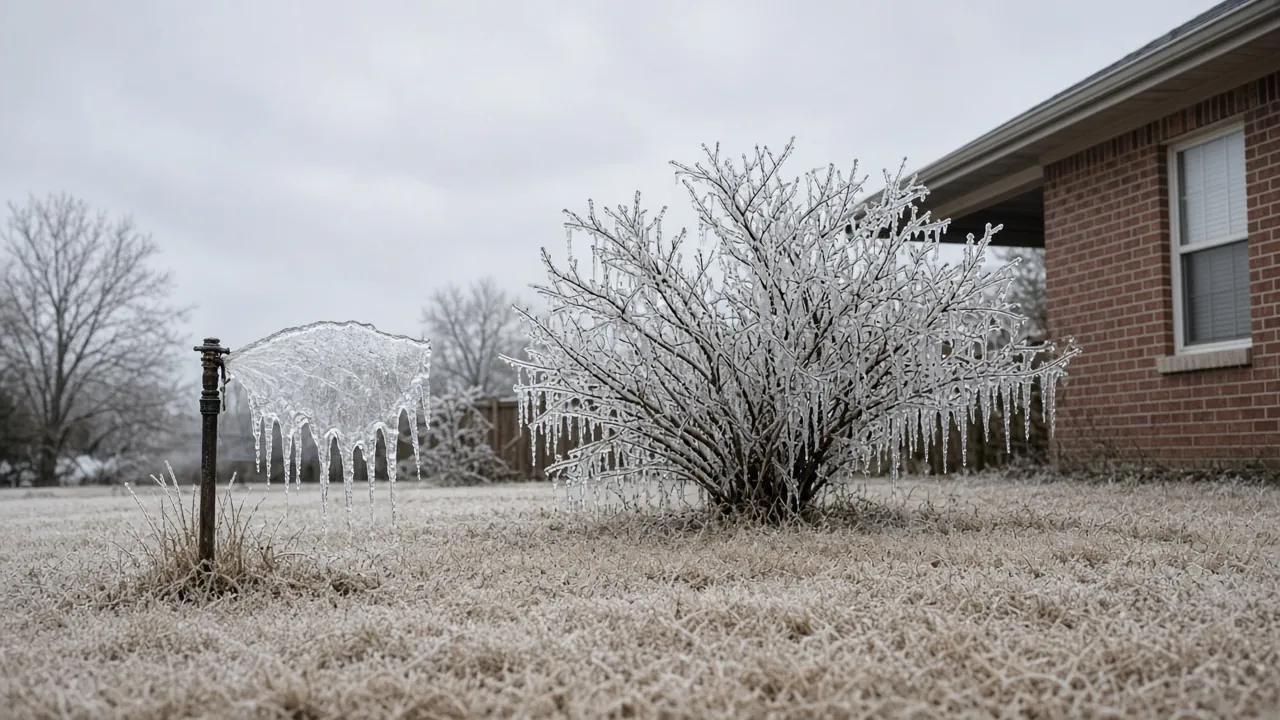
A freeze sensor shuts the system off when the temperature drops near freezing. Many units combine rain and freeze sensing in one housing. In a Dallas cold snap, this prevents the system from spraying water that turns into ice on drives, walks and streets.
Where it should go
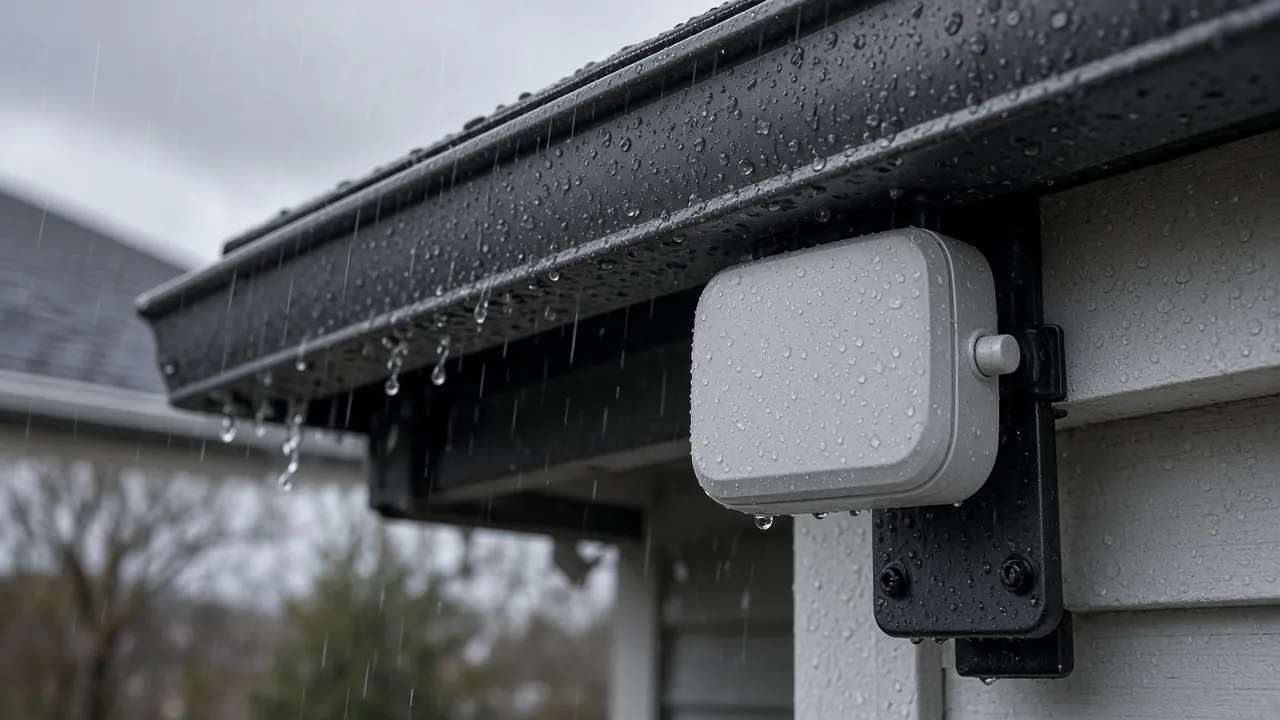
A sensor has to be exposed to open sky and actual rain. It should not be under eaves, under a tree, or in a spot sheltered from the wind-driven rain. It also should not be in the direct path of a sprinkler head, or it will trip itself. Gutter edges, fence tops and eaves with a clear view of the sky are common spots.
Why so many do not work
We find a lot of sensors that look fine but do nothing:
- Bypassed at the controller. Many controllers have a sensor bypass switch or setting. Someone flips it to run the system during a dry spell and never flips it back.
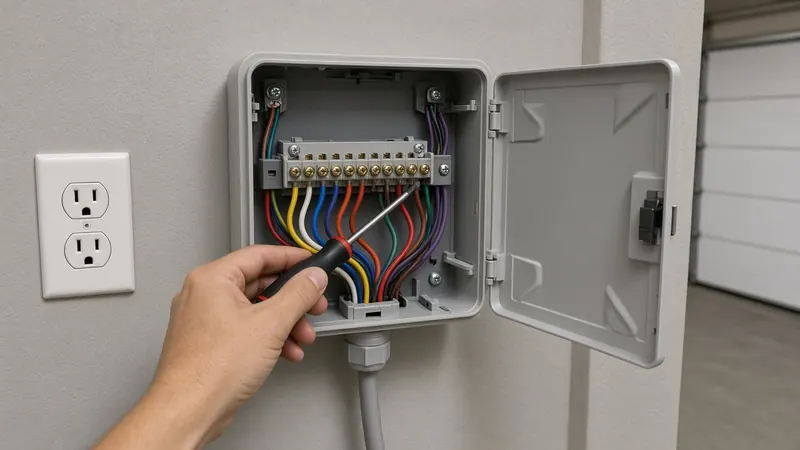
- Disconnected wire. Wired sensors run a two-wire cable to the controller. Painters, roofers and gutter installers cut or unplug it.
- Discs worn out. Old discs stop swelling properly.
- Wireless battery dead. Wireless sensors have batteries that need replacing.
- Installed where it never gets wet. Under an overhang or behind a tree.
How to test yours
- Make sure the controller sensor setting is active, not bypassed.
- Start a zone manually.
- For a disc-type rain sensor, many have a test button or plunger. Press it, or spray the sensor with a hose for a minute. The zone should stop.
- For a wireless sensor, check the receiver for a signal and battery status. Many have a test button.
- For freeze, you usually cannot test it easily outside of cold weather, but you can confirm it is connected and the controller recognizes it.
If the zone keeps running, the sensor is bypassed, disconnected or broken.
Setting the rain threshold
Most disc-type sensors let you set the trip point, often somewhere between an eighth and an inch of rain. A setting around a quarter to half an inch is a reasonable start for Dallas lawns. Too low and the system shuts off for a light drizzle that does not do the lawn much good. Too high and it keeps watering after a good soaking.
The sensor also needs to dry out before the system resumes. In humid weather that can take a day or two, which is usually fine since the soil is still wet.
Adding a sensor to an older system
Most controllers have sensor terminals, so adding one is straightforward. If yours does not, a sensor can be wired to interrupt the common wire. We install the sensor, run the wire, connect it, and test it. If you are replacing the controller anyway, pick one with sensor inputs.
Sensors and smart controllers
Smart controllers adjust watering based on weather data, which is great for gradual seasonal changes. A physical sensor reacts to what is actually happening at your house. Many people use both. See smart controllers in Dallas.
Call us
If you are not sure your system has a working sensor, call 469-208-4222. We test sensors on every repair visit and can install one if you do not have it.
Sources
Have a question this did not answer? Call 469-208-4222 and ask. More articles on the blog.