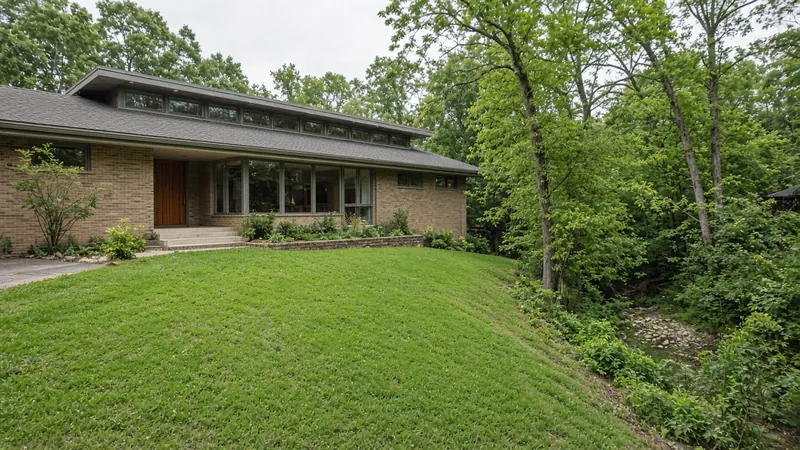
Look at the brick under the windows of many Dallas homes and you will see white mineral stains from years of spray heads hitting it. Those heads were meant for the shrubs in front of the house. Plants grew, heads got blocked, and now the zone waters the wall better than the bed. Drip irrigation fixes that.
How drip works
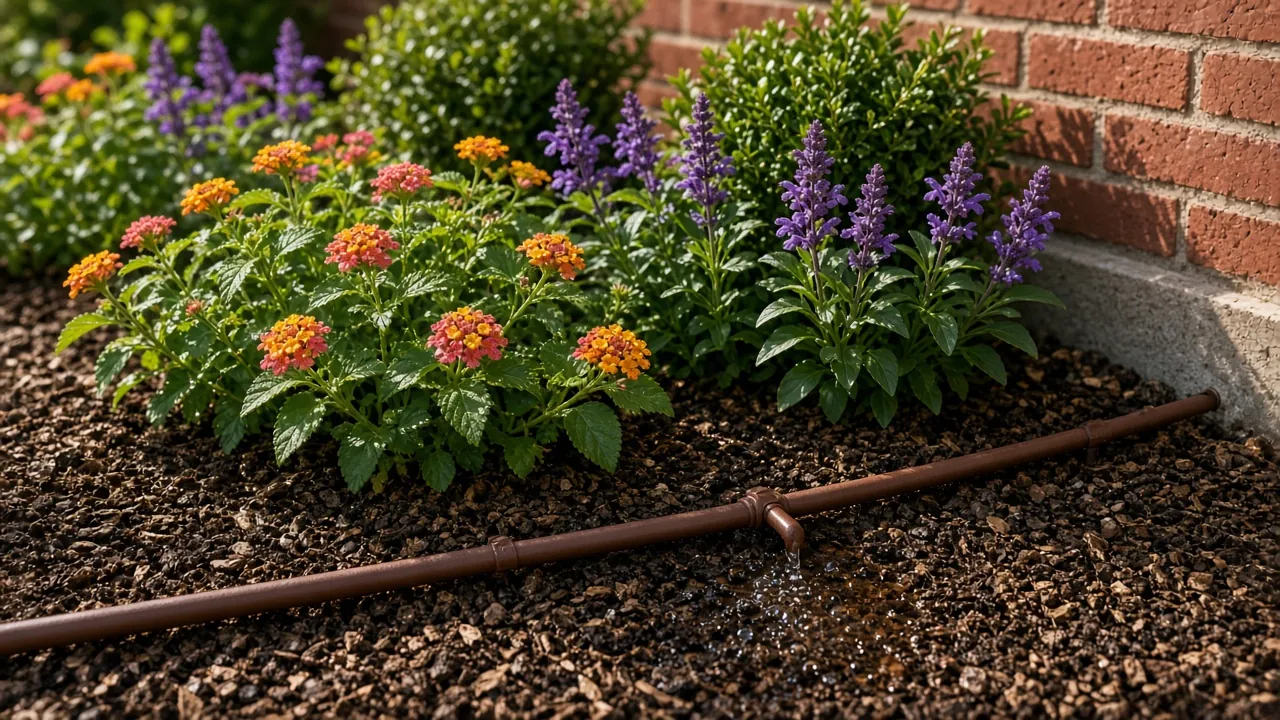
Drip irrigation uses low-pressure tubing laid on the soil, usually under mulch. Water comes out through emitters, small fittings that release a set amount, often measured in gallons per hour. Some tubing has emitters built in every 12 or 18 inches. Other setups use blank tubing with emitters punched in at each plant.
Because water goes straight to the soil, almost none is lost to wind, evaporation or overspray. It also soaks into clay slowly, which suits Dallas soil well.
Why drip suits beds
- Plants block spray. Shrubs and perennials grow into the spray pattern within a season or two.
- Different plants, different needs. Emitters can be sized per plant.
- Dry leaves. Keeping water off foliage helps reduce leaf diseases.
- No overspray. Walls, windows and walks stay dry, which matters under the Dallas ordinance.
- Slow application on clay. Less runoff.
Converting a spray zone to drip
Many bed zones can be converted without new pipe from the valve. A typical conversion:
- Cap the spray heads on the zone, or replace one riser with a conversion fitting.
- Add a filter. Drip emitters have tiny openings. A filter keeps sediment out.
- Add a pressure regulator. Drip tubing works at much lower pressure than spray heads. Without a regulator, fittings blow apart.
- Lay the tubing along the plants, staked down, under the mulch.
- Place emitters at each plant, more for larger shrubs.
- Add a flush cap at the end of each run so the line can be flushed.
- Set the run time. Drip runs much longer than spray, because it applies water slowly. An hour or more is common.
Drip and spray should never share a zone. They need completely different run times and pressures.
Foundation plantings and clay
Many Dallas homeowners water near the foundation because clay soil shrinks when it dries and can affect the slab. A drip line in the foundation bed keeps that soil from drying out completely without soaking it. If you have specific foundation concerns, a foundation professional can advise how much moisture to aim for.
Common drip problems
Cut tubing. Shovels and edgers cut drip lines. Repairs are simple with couplings.
Clogged emitters. Mineral scale and debris block emitters. A good filter, cleaned periodically, prevents most of this.
Missing filter or regulator. We often find drip installed straight off a spray valve. The result is blown fittings and clogged emitters.
Emitters in the wrong place. As plants grow, their roots spread. Emitters placed at the stem when planted may need to move outward.
Tubing exposed to sun. Drip tubing should be under mulch. Exposed tubing degrades and gets kicked around.
Watering rules and drip
The City of Dallas ordinance allows hand watering and soaker hoses on any day. If you want to run a drip zone outside your sprinkler days, check the city’s current rules first. Keeping drip on your regular days is always fine.
Maintenance
- Flush the lines at the end caps once or twice a year
- Clean the filter screen
- Walk the beds while the zone runs and look for geysers from broken fittings or dry plants
- Check emitter placement when you add or remove plants
Call us
If you want to convert a bed zone to drip, or your existing drip is leaking or clogged, call 469-208-4222.
Sources
Have a question this did not answer? Call 469-208-4222 and ask. More articles on the blog.