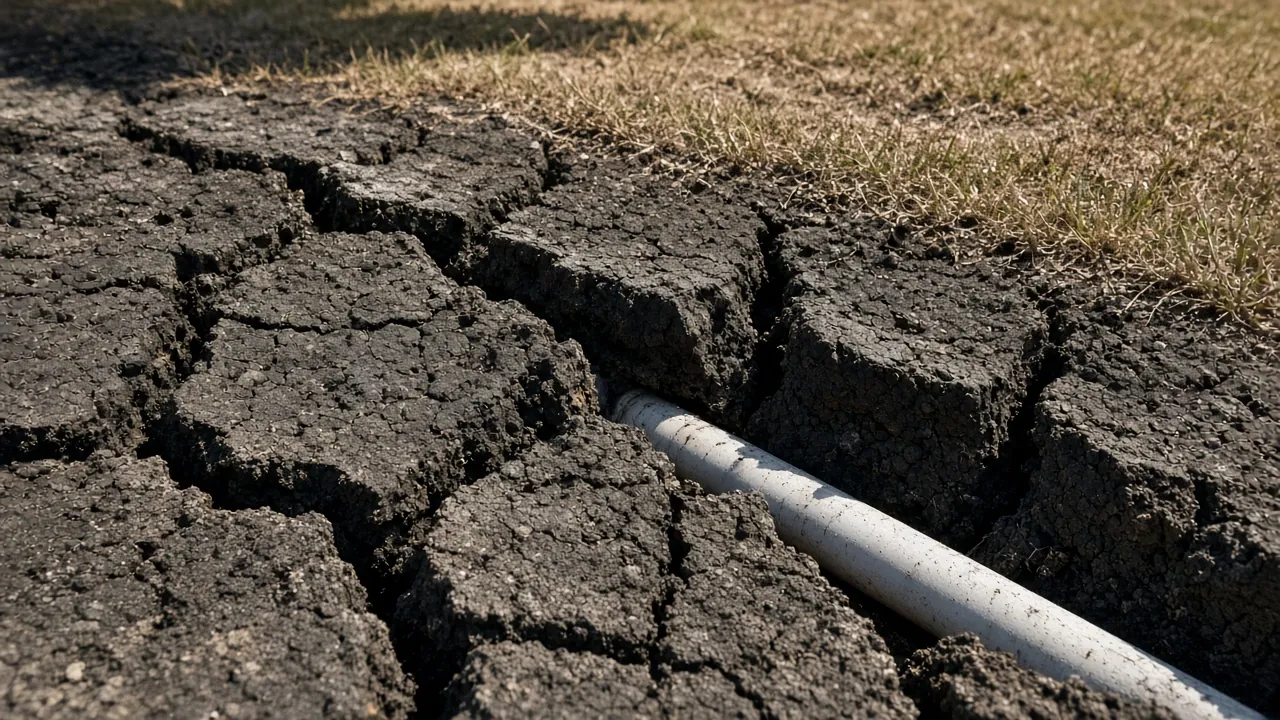
Ask anyone who has lived in Dallas through a dry August what the yard looks like. Cracks open in the lawn wide enough to lose a pen in. Then a week of spring rain turns the same ground into sticky mud. That is the Blackland Prairie clay that sits under much of Dallas County, and it is the main reason sprinkler systems here break the way they do.
What makes this clay different
Clay soils are made of extremely fine particles. Some clays, including the ones common in the Dallas area, swell as they absorb water and shrink as they dry. Engineers call them expansive soils. The movement is not small. Over a year, the ground can rise and fall noticeably, and it does not move evenly. A patch under a shade tree stays damper than a patch on the south side of the house. The soil next to a driveway dries differently from the middle of the lawn.
Foundation repair companies in Dallas exist largely because of this soil. Your sprinkler pipes are in the same ground, only a few inches down, with no concrete around them.
What the movement does to a sprinkler system
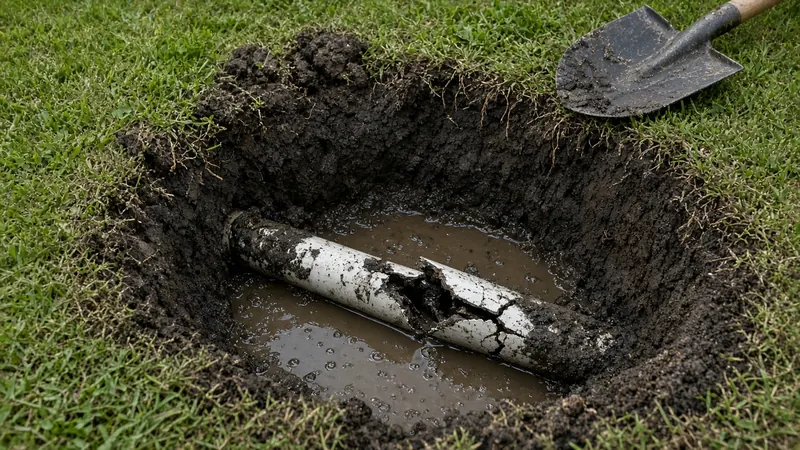
Cracked fittings. Most residential sprinkler pipe is PVC, joined with glued fittings at tees, elbows and couplings. Pipe can flex a little. Fittings are stiffer, and a glue joint is a weak point. Year after year of push and pull concentrates stress at those joints until one cracks. That is why most of the leaks we dig up are at a fitting, not in the middle of a straight run.
Broken risers and swing joints. Each head connects to the lateral through a short riser or a flexible swing joint. Rigid risers snap when the soil heaves or when a head gets stepped on. Flexible swing joints handle it much better, and they are what we use when we replace a head.
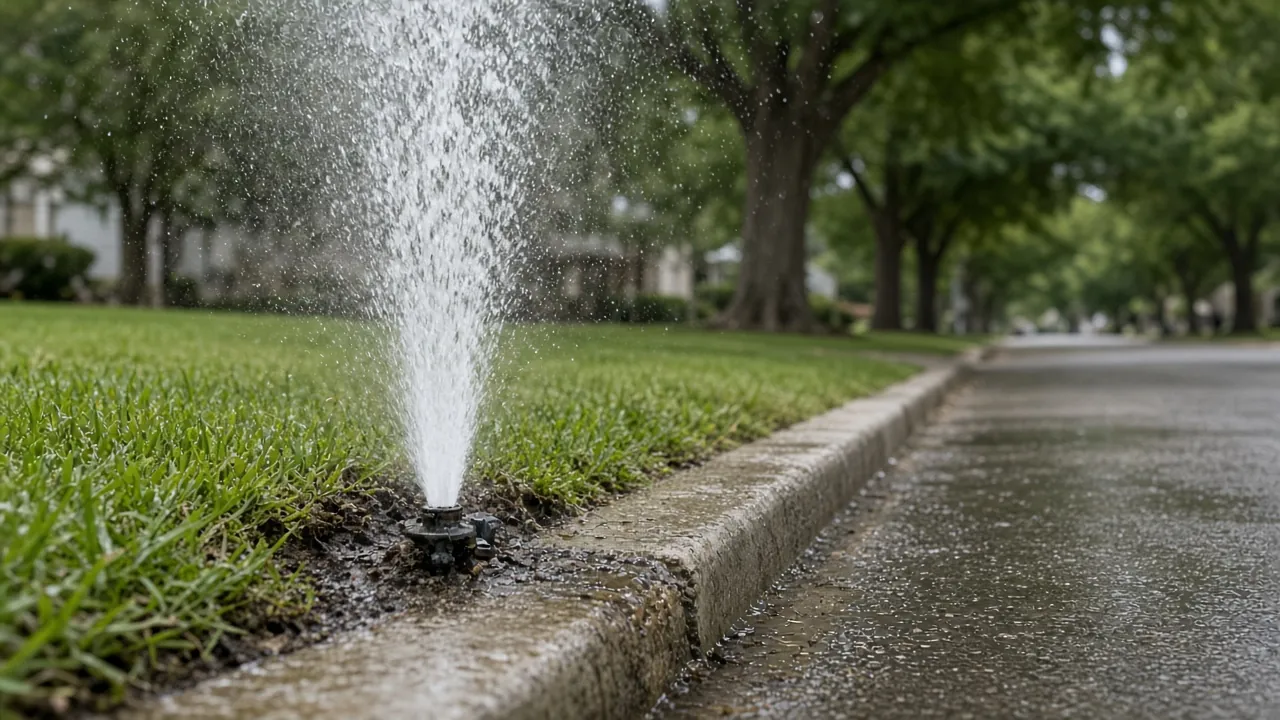
Heads out of level. As the ground moves, heads tilt. A tilted spray head throws water into the turf on one side and into the air on the other. Over time heads also sink as soil settles around them and grass builds thatch above them. Eventually they cannot clear the grass.
Valve boxes full of mud. Valve boxes are open at the bottom. Clay and water get in, the box tilts, the lid gets buried under sod. A valve sitting in mud is harder to service and more likely to fail.
Wire splices pulled apart. Low-voltage wire runs alongside the pipe. When the soil moves, splices that were not made with waterproof, strain-resistant connectors can pull apart or corrode.
Why the problems show up in summer and after storms
Leaks often appear at the two ends of the cycle. In late summer, the soil is at its driest and has shrunk the most, so pipes are under the most strain. After a wet spell the soil swells again and shifts things the other way. If you notice a new wet spot in August or right after the first big rains of fall, the soil movement probably finished off a joint that was already weak.
How to tell if your system has clay damage
- A soggy spot that stays wet days after watering
- Water bubbling up around a head when the zone runs
- A zone with weak spray and heads that barely rise
- A higher water bill with no change in habits
- Heads that are tilted, sunk, or spraying the wrong way
- Valve boxes you cannot find or open
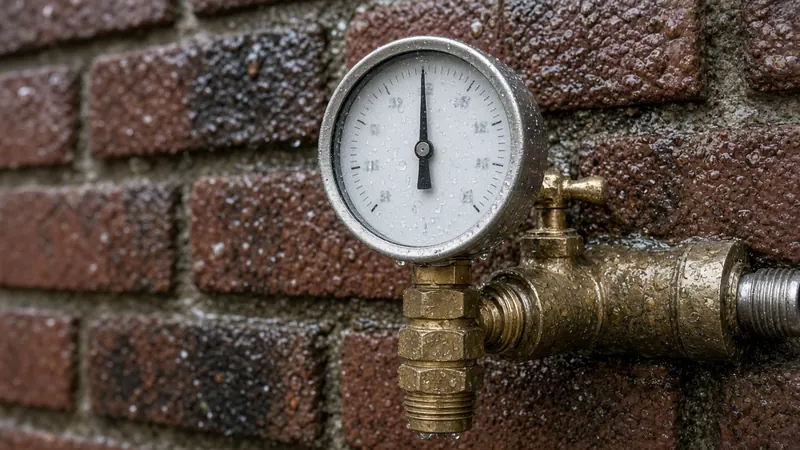
For leaks on the pressurized mainline, the simplest test is the water meter. Turn off everything in the house and watch it. If it still moves, something is leaking. Our article on finding a sprinkler leak goes through it step by step.
What helps
You cannot stop the soil from moving, but you can make the system more tolerant of it and reduce the extremes.
Water consistently. Large swings between bone dry and saturated make the movement worse. A steady schedule within the twice-a-week rules keeps soil moisture more even. It is the same reason many foundation companies recommend keeping soil near the slab from drying out completely.
Use cycle and soak. Clay takes water in slowly. If a zone runs long, water runs off the surface and the soil below stays dry. Short cycles with a rest between them soak in deeper. See cycle and soak for Dallas clay.
Repair with flexible connections. When we replace heads, we use swing joints instead of rigid risers. When we repair pipe, we use the right couplings and make sure the bedding under the repair is firm so it does not become the new weak point.
Keep heads at grade. Raising sunk heads and leveling tilted ones restores coverage and protects them from mowers.
Fix valve boxes. Clean them out, reset them level, and add gravel at the bottom so water drains instead of turning the box into a mud pit.
When an old system is worth fixing
People sometimes assume an older system with repeated leaks needs to be replaced. Usually it does not. The pipe itself often has many years of life left. The weak points are fittings, risers, heads and valves, and those can be replaced individually. If a single section keeps failing, we can replace that section. A full replacement only makes sense when leaks are everywhere or the original design does not fit the yard anymore.
Get it checked
If you are seeing any of the signs above, call us at 469-208-4222. We will run every zone, find the source, and fix it, then set the controller so the system waters evenly through the year.
Sources
Have a question this did not answer? Call 469-208-4222 and ask. More articles on the blog.