Sprinkler leaks are one of the most common reasons people call us, and one of the most frustrating problems for homeowners because they hide so well. Dallas clay holds water and spreads it sideways, so a wet spot can show up several feet from the actual break. A good diagnosis starts with a few simple checks that anyone can do.
Step one: the water meter test
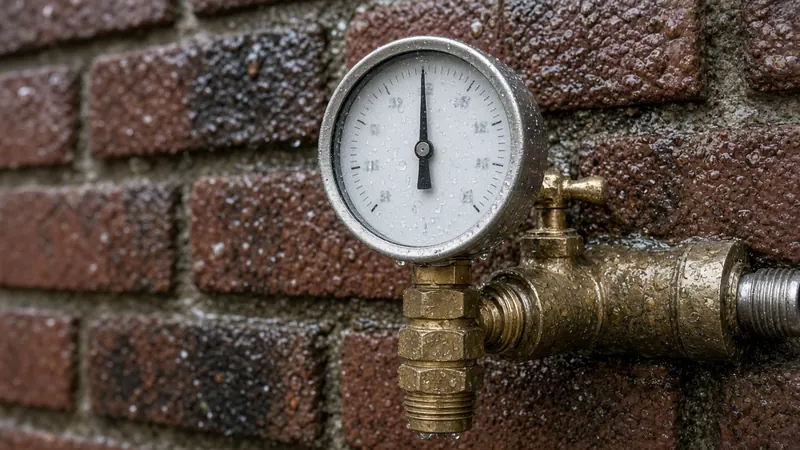
Your water meter is usually in a concrete or plastic box near the street. Open the lid carefully (watch for wasps and fire ants), and find the dial. Most meters have a small triangle or star, often called a leak indicator, that spins when any water flows.
- Turn off every water use in the house: faucets, the dishwasher, the washing machine, the ice maker if you can.
- Make sure the sprinkler controller is off, not just between cycles.
- Look at the leak indicator. If it is moving, water is flowing somewhere.
If it moves, the leak is somewhere on a line that is always under pressure. That could be inside the house (a running toilet is the usual suspect), on the service line between the meter and the house, or on the sprinkler mainline.
To separate the house from the sprinklers, close the irrigation shut-off valve. It is usually just upstream of the backflow device near the house, or in a box near the meter. If the indicator stops when the irrigation valve is closed, the leak is on the sprinkler side.
Step two: mainline or lateral
A sprinkler system has two kinds of pipe.
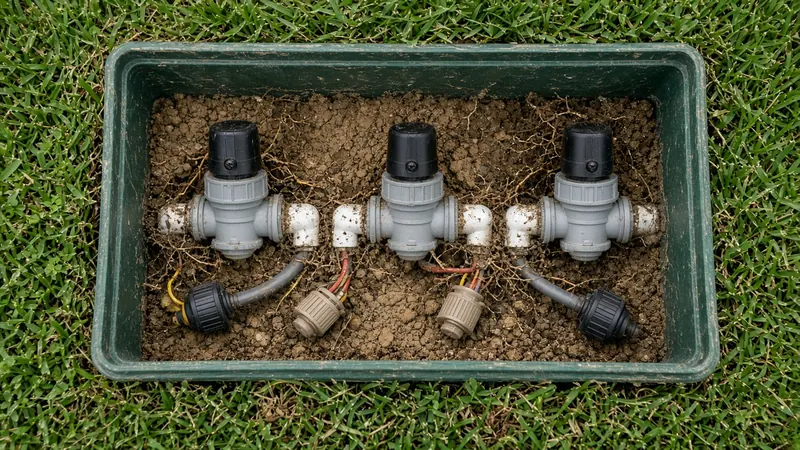
The mainline runs from the backflow device to each zone valve. It is under pressure all the time. A mainline leak leaks 24 hours a day, which is what drives up a bill. The meter test above catches it.
Laterals run from each valve to the heads. They are only pressurized while that zone runs. A lateral leak only leaks during watering. It does not move the meter when the system is off, and it does not usually cause a dramatic bill. What you see is a soggy area, weak spray at the heads downstream, or water bubbling up from the ground when the zone runs.
If the meter test is clean but you have a wet area, run the zone that covers it and watch. Water bubbling or pooling while the zone runs, and weak or uneven heads past that point, point to a lateral leak.
Step three: rule out the valve
A zone valve that does not seal completely lets a small stream of water through all the time. That water drains to the lowest head on the zone and seeps out there. The result is a wet spot near one head, even when the system has been off for days. Sometimes the meter indicator moves very slowly.
If you have a wet spot right at the lowest head on a zone, especially on a slope, suspect the valve before the pipe. Our article on zones that will not shut off covers valve problems in more detail.
Step four: look for the obvious
Before anyone digs, walk every zone while it runs:
- Look for geysers or heads that are bubbling instead of spraying, which point to a broken head or riser
- Look for heads that never rise, which point to low pressure on that zone, possibly a leak upstream
- Look for water coming up between heads where nothing should be
- Check the backflow device for drips or spray
A large share of what people call leaks are actually broken heads or risers. Those are quick fixes. See why heads stop popping up.
Why the wet spot is not over the leak
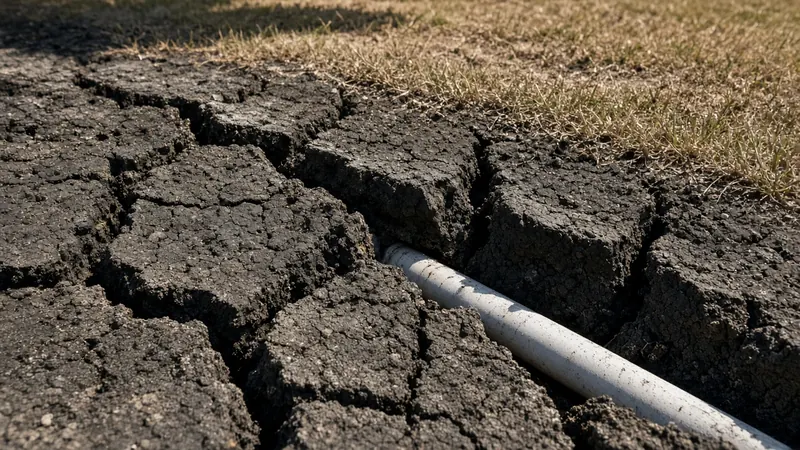
Water follows the easiest path. In clay, that might be along the trench where the pipe was laid, because that soil was disturbed and is looser. It might be downhill along a slope. It might come up wherever the turf is thinnest. So the spot where water surfaces is a clue, not a guarantee. We look at where the pipe should run between the valve and the heads, the slope of the yard, and how the zone behaves, then dig where the evidence points.
What a repair involves
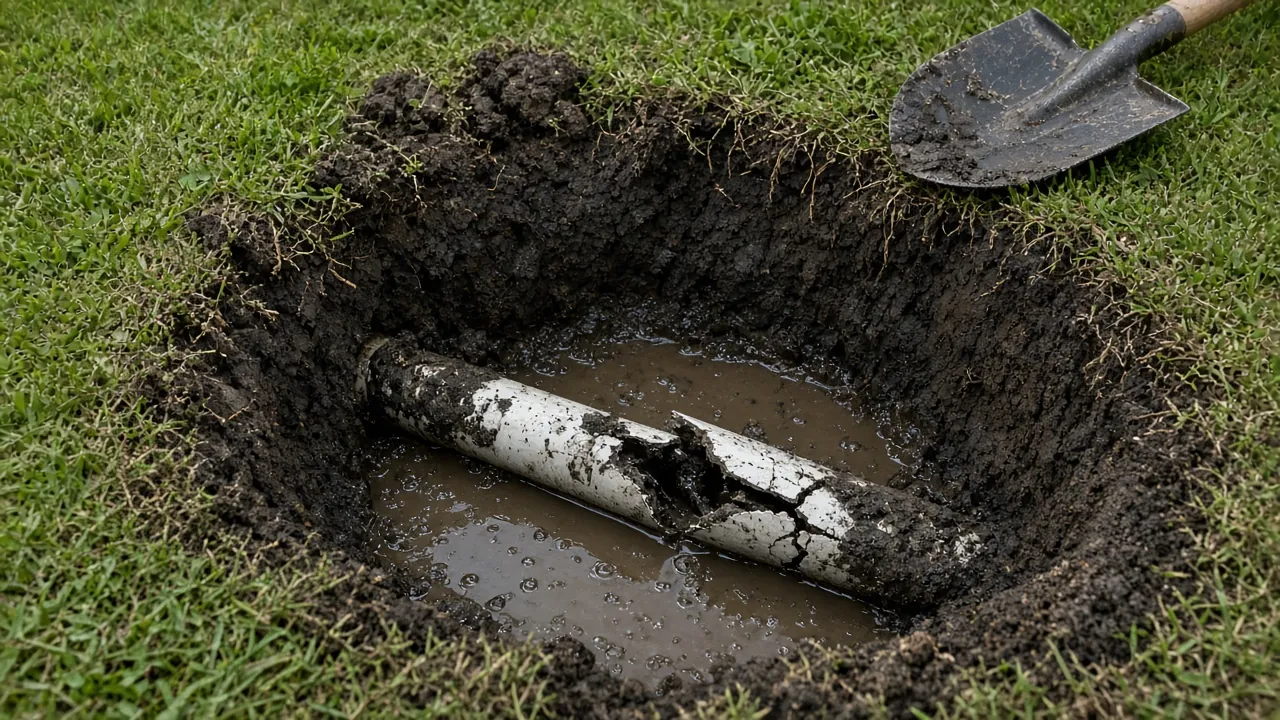
Once the break is found, we cut the sod in a piece and set it aside, dig down to the pipe, and cut out the damaged fitting or section. We replace it with new pipe and the right couplings, flush the line so no dirt gets into the heads, and run the zone to check for leaks before backfilling. The soil is packed back in layers so the spot does not sink, and the sod goes back on top.
Most leaks are at fittings, because that is where soil movement puts the most stress. Why Dallas clay breaks sprinkler pipes explains why.
What not to do
- Do not keep running a zone with a known leak. It wastes water and can wash out the soil around the pipe, making the repair bigger.
- Do not dig with a sharp spade near the line. It is easy to cut a pipe or wire you did not know was there.
- Do not ignore a slow meter movement. Small leaks add up over a month.
Dallas rules and leaks
The City of Dallas ordinance requires broken heads to be repaired and bans runoff into the street. A leak that sends water down the gutter can draw a warning. Dallas Water Utilities also uses tiered rates, so the more water you use, the higher the rate on the last gallons. A hidden leak costs more than you might think.
Call for help
If the meter test points to the sprinkler side, or you have a wet spot you cannot explain, call us at 469-208-4222. Tell us what the meter did and where the water is. That helps us come prepared, and most leaks get fixed on the first visit.
Sources
Have a question this did not answer? Call 469-208-4222 and ask. More articles on the blog.