A zone that will not turn off is one of the more alarming sprinkler problems, because water keeps pouring out and the controller seems to have no effect. The good news is that it is usually a single valve problem and is very fixable. The first job is to stop the water.
Stop the water first
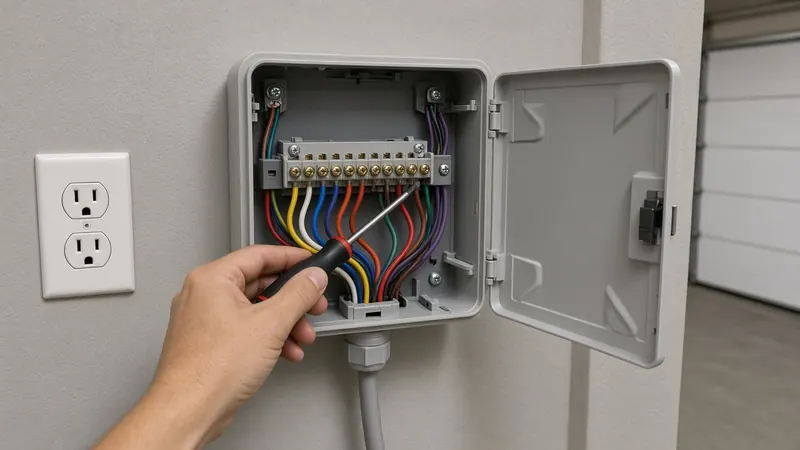
- Turn the controller to Off. If the zone stops, the controller was sending it a signal, which is a programming or controller problem, not a valve problem. Check the programs for extra start times or a manual run left on.
- If water keeps running, close the irrigation shut-off valve. It is usually on the line just upstream of the backflow device near the house. Some systems have it in a box near the water meter. It may be a lever handle or a gate valve with a round handle.
- If you cannot find an irrigation shut-off, close the main water to the house at the meter or the house shut-off, and call for help. That stops water to the whole house, so it is a last resort.
Once the water is off, the problem can wait for a repair visit without wasting more.
How a zone valve opens and closes
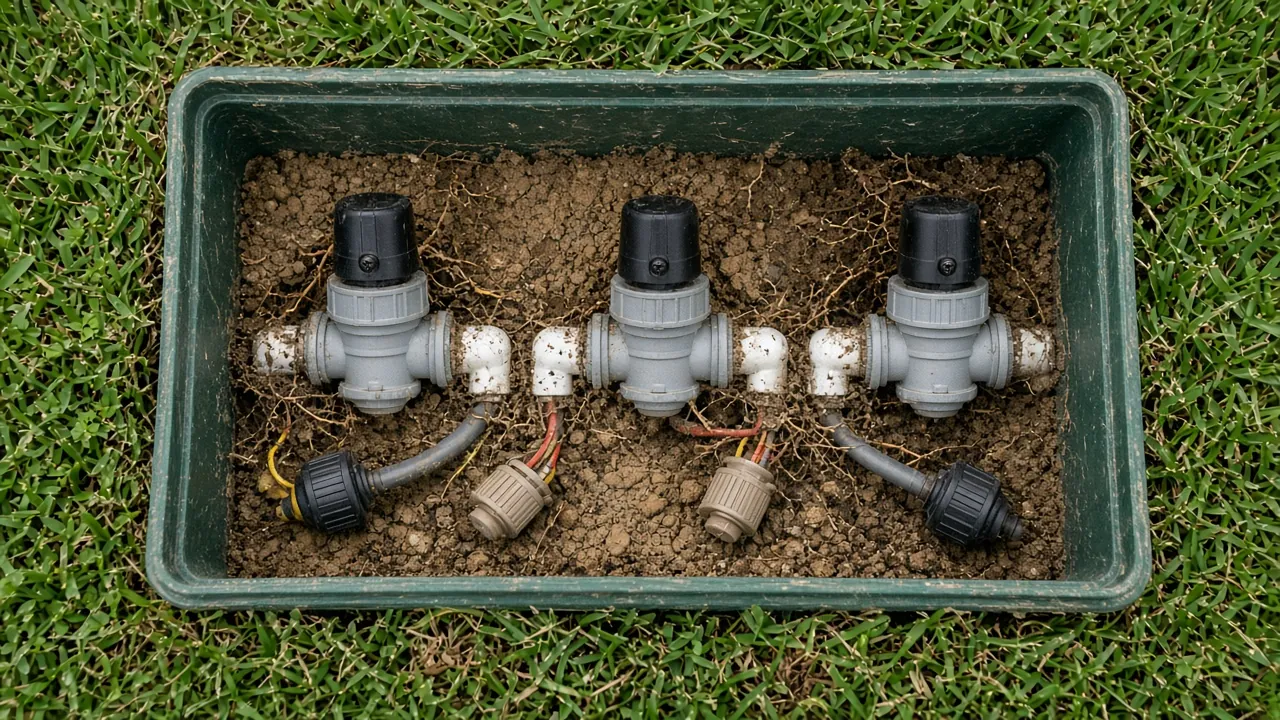
Each zone valve is a small hydraulic device. Water pressure sits on both sides of a rubber diaphragm. When the controller sends 24 volts to the solenoid on top of the valve, the solenoid lifts a small plunger and lets water bleed off the top side of the diaphragm. Pressure underneath then pushes the diaphragm up and water flows to the zone. When the signal stops, the plunger drops, pressure builds back on top, and the diaphragm closes.
Anything that keeps that bleed path open or keeps the diaphragm from seating will hold the valve open.
Common causes
Debris under the diaphragm. Grit, a piece of PVC, a bit of thread tape, or sand from a line repair can lodge under the diaphragm so it cannot close. This is especially common right after a pipe repair or a water main break in the street.
A torn or worn diaphragm. Rubber wears out. A small tear lets pressure equalize so the diaphragm never closes all the way. The valve might close partway and dribble.
The manual bleed left open. Most valves have a small screw or lever that lets you turn the zone on by hand. If someone opened it to test the zone and did not close it, the zone runs until it is closed.
The solenoid stuck open. The plunger inside the solenoid can stick from debris or corrosion, keeping the bleed path open.
A flow control turned all the way out. Some valves have a flow control handle on top. In rare cases a misadjusted one keeps the valve from closing fully.
The controller. If the zone stops when the controller is off but runs at odd times, look for an extra program or start time. Some controllers have failed outputs that stay on. That is less common but possible.
A weeping valve is a smaller version of the same problem
If a zone does not gush but you have a wet spot by the lowest head that never dries, the valve may be closing most of the way but not sealing. Water seeps through and drains out of the lowest point. Our leak-finding guide explains how to tell a weeping valve from a pipe leak.
What a repair looks like
We start at the controller to rule out programming. Then we find the valve, which can be harder than it sounds if the box has been buried under sod or mulch. With the water off, we take the top off the valve, check the diaphragm and seat, clean out debris, and replace the diaphragm or solenoid if they are worn. On many valves this is a rebuild rather than a replacement.
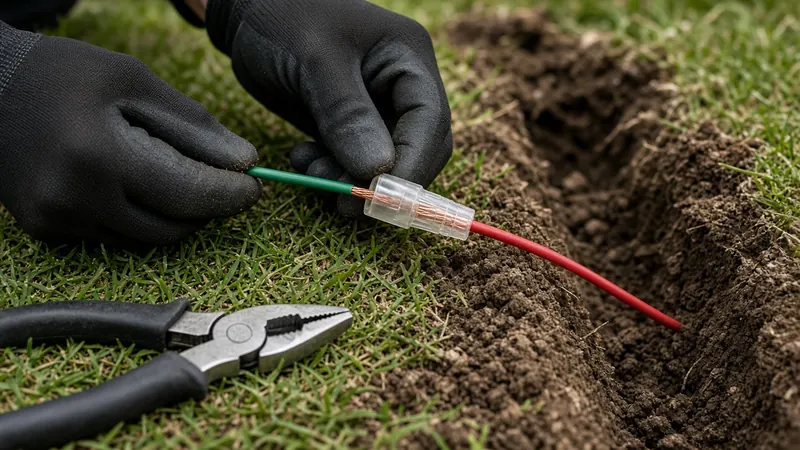
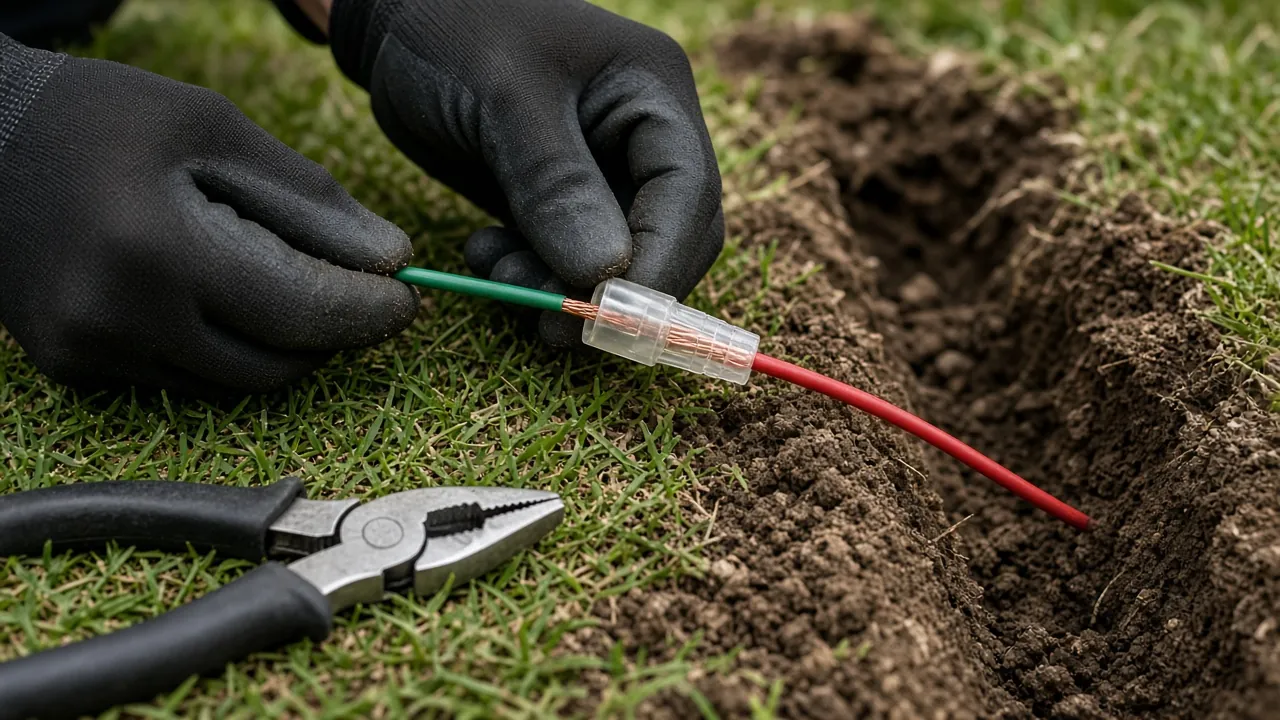
If the valve body is cracked, the parts are no longer available, or the valve is badly corroded, we replace it. While the box is open, we clean it out, reset it level and make sure the wire splices are waterproof.
After the repair we run the zone from the controller, turn it off, and confirm it closes fully.
Can you fix it yourself?
If you are comfortable with it, closing a manual bleed screw or clearing a bit of grit from a valve is doable. Shut the irrigation water off first. Remove the bonnet screws evenly, lift the top off, note how the diaphragm and spring sit, rinse them, and reassemble the same way. Do not overtighten plastic screws. If the diaphragm is torn or you are not sure which valve controls which zone, it is a good time to call.
Preventing it
- After any line repair, flush the zone with the last head removed before running it normally, so debris does not end up in a valve
- Keep valve boxes cleaned out and level so the valves are not sitting in mud
- Replace diaphragms on very old valves when you are already servicing them
- Know where your irrigation shut-off valve is before you need it
Zones that will not turn on
The opposite problem, a zone that never starts, is often electrical: a dead solenoid, a cut wire, or a controller output. See why a sprinkler zone won’t turn on.
Call us
If a zone will not shut off, close the irrigation valve and call 469-208-4222. We will find the valve, fix it, and check the rest while we are there.
Have a question this did not answer? Call 469-208-4222 and ask. More articles on the blog.